Jet lag is the price of crossing time zones. Your body runs on an internal 24-hour clock (your circadian rhythm), and when you land somewhere that rhythm doesn’t match, you get the familiar mix of fatigue, broken sleep, brain fog, low appetite and an upset stomach. The good news: you can shrink it dramatically with a plan that starts before you fly and continues for a few days after you land.
This practical, step-by-step guide shows you how to beat jet lag before, during and after your flight, based on guidance from sources such as the CDC Yellow Book and the NHS. Want a plan built around your exact route? Try the Jet Lagging app.
Table of Contents
Why Jet Lag Happens (and Why Direction Matters)
Your circadian clock is set mainly by light, and to a lesser degree by meal timing, activity and social cues. After a long-haul flight, that internal rhythm needs time to catch up with the new time zone. According to the CDC, travelers adapt at roughly 1 hour per day when traveling east and about 1.5 hours per day when traveling west.
- Traveling east (e.g. New York to Dubai, Dubai to Tokyo) is usually harder. You need to fall asleep and wake up earlier, which goes against the body’s natural tendency to drift toward a later schedule.
- Traveling west (e.g. Dubai to London, London to Los Angeles) is typically easier, because staying up a bit longer comes more naturally.
- Flying north–south with little time-zone change causes travel fatigue, but not true jet lag.
Some travelers feel it more than others. The Mayo Clinic notes that the number of time zones crossed, flight direction, frequent flying and age all play a role, with older adults often needing longer to recover.
Jet Lag Symptoms: What to Expect
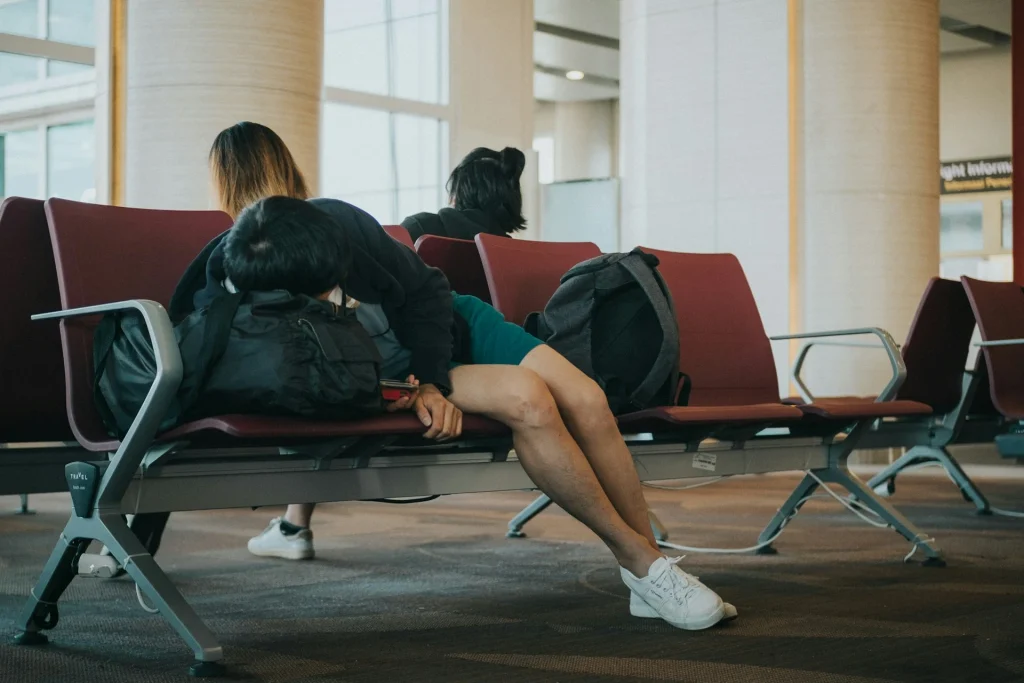
Symptoms usually appear within a day or two of arrival once you’ve crossed two or more zones. The most common ones include:
- Trouble falling asleep at bedtime, or waking in the small hours
- Daytime tiredness and difficulty staying alert
- Poor concentration and memory
- Irritability or low mood
- Digestive changes: reduced appetite, nausea or constipation
Most people feel better within a week. If you still can’t function normally after that, or you travel often and struggle every trip, it’s worth talking to a doctor.
Before Your Flight: Set Yourself Up to Win
1. Start shifting your sleep 2–3 days early
Move your bedtime and wake time by 30–60 minutes per day toward your destination’s time zone. Heading east? Go to bed and get up earlier. Heading west? Go to bed and get up later. Even a partial shift of one or two hours makes the start of your trip noticeably easier.
2. Use light strategically
Light is the most powerful tool you have. Flying east? Get bright light in the morning and dim the lights in the evening. Flying west? seek out light in the evening and keep mornings dim. A few days of this nudges your body clock in the right direction before you even pack.
3. Don’t board exhausted
Many travelers pull a late night of packing and work before a big trip, thinking they’ll “rest on the plane.” Starting sleep-deprived compounds jet lag. Aim for two full nights of good rest before you fly.
4. Choose your flight wisely
Where you can, pick flights that land in the late afternoon or early evening. That way you only need to stay awake a few hours before a normal local bedtime. Overnight flights that let you sleep through the destination’s night are also a good option.
5. Pack a jet lag kit
- Eye mask and earplugs or noise-canceling headphones
- A travel pillow and a light layer (cabins get cold)
- A refillable water bottle
- Compression socks for long-haul flights
- Sunglasses, to block light at the wrong times after landing
During Your Flight: Live on Destination Time
6. Change your watch the moment you board
Set your phone and watch to your destination’s time as soon as you take your seat. Then ask one simple question for the rest of the flight: “What would I be doing right now if I were already there?” If it’s nighttime at your destination, try to rest. If it’s daytime, stay awake.
7. Sleep smart, not randomly
When it’s night where you’re going, put on your eye mask, recline and skip the screens. When it’s daytime there, keep the window shade up (if your neighbors agree), watch a film, read and resist long naps. A short nap of 20–30 minutes is fine if you’re struggling.
8. Hydrate — and go easy on alcohol and caffeine
Cabin air is very dry, and dehydration makes fatigue and headaches worse, so drink water regularly. Alcohol might make you drowsy, but it fragments sleep and dehydrates you. Save caffeine for your destination’s morning or early afternoon, and avoid it in the six hours before your new bedtime.
9. Time your meals to the new schedule
Meal timing helps reset your internal rhythm. Try to eat according to destination mealtimes, and feel free to skip or push back an in-flight meal served at 3am destination time. Lighter meals are also easier on the stomach at altitude.
10. Move around
Walk the aisle every hour or two when it’s safe, and do simple seated stretches: ankle circles, calf raises and shoulder rolls. Movement keeps circulation going, reduces stiffness and helps you feel more alert when you’re meant to be awake.
After You Land: Lock In the New Rhythm
11. Get outside in daylight
Natural light is the fastest way to reset your body clock. After traveling east, prioritize morning light and avoid bright light late in the day. After traveling west, get plenty of afternoon and early-evening light. A walk outdoors beats any café window.
12. Stay awake until a sensible local bedtime
If you arrive in the afternoon, push through until at least 9–10pm local time. If you absolutely must nap, keep it under 30 minutes and before mid-afternoon; otherwise it will eat into your first proper night.
13. Make your room sleep-friendly
Keep it dark, cool and quiet. Close the blackout curtains, turn the thermostat down, and put your phone away an hour before bed. If you wake at 3am wide awake (common after eastbound flights), keep the lights low and stay in bed resting rather than scrolling.
14. Eat, exercise and socialize on local time
Have breakfast, lunch and dinner at normal local hours, even if you’re not hungry. Light exercise, ideally outdoors in the morning or early afternoon, boosts alertness and helps you drift off at the right hour. Seeing people and following local routines sends your body more “this is daytime” signals.
15. Consider melatonin (with advice)
Low-dose melatonin taken around local bedtime can help some travelers adjust, particularly after eastbound flights. The CDC notes that 0.5–1 mg is often enough and advises against high doses above 5 mg. Rules on availability vary between countries and it isn’t right for everyone, so check with your doctor or pharmacist first — especially if you take other medication.
16. Be patient for the first few days
Even with a perfect plan, it can take a while to feel fully normal after a big shift. Schedule demanding meetings or big activities for later in the trip if you can, and give yourself some grace in the meantime.
How Long Does Jet Lag Last? A Quick Guide
Using the CDC’s average adaptation rates (about 1 hour per day eastbound and 1.5 hours per day westbound), here’s roughly how long it takes to fully adjust without any help. A good plan can shorten these numbers.
| Hours of difference | Flying east (approx. days to adjust) | Flying west (approx. days to adjust) |
|---|---|---|
| 3 hours (e.g. London to Dubai) | 3 | 2 |
| 6 hours | 6 | 4 |
| 8 hours (e.g. Dubai to New York) | 8 | 5–6 |
| 10–12 hours | 10–12 | 7–8 |
For very large shifts (10 hours or more), some people find it easier to adjust in the opposite direction, which is one reason a personalized plan helps.
Special Case: Short Trips
If you’re only away for one to three days, it may be better not to adjust fully. Try to stay close to your home schedule, book meetings during hours that overlap with your usual day, and use caffeine and light tactically to stay sharp. You’ll recover much faster when you get home.
How to Beat Jet Lag: Quick Checklist
- Before: shift your bedtime 2–3 days early, use light strategically, rest well, pick a smart arrival time.
- During: switch to destination time, rest or stay awake to match it, drink water, limit alcohol, move around.
- After: get daylight at the right time, stay up until local bedtime, eat on local time, keep naps short.
Get a Personalized Jet Lag Plan with the Jet Lagging App
Working out exactly when to seek light, when to avoid it and when to rest on your particular route can get complicated, especially across eight or more time zones. That’s why we built the Jet Lagging app.
Enter your flight details and it creates a personalized, hour-by-hour plan that tells you when to sleep, when to get light, when to avoid it, and how to time caffeine before, during and after your trip. No guesswork: just follow the plan and land ready to enjoy your travel.
Create your free jet lag plan at app.jetlagg.ing →
How to Beat Jet Lag: Frequently Asked Questions
How long does jet lag last?
As a rough guide, allow about one day per time zone crossed for your body clock to fully adjust, a little longer going east. A 4-hour difference may take around 3–4 days, while crossing 8 or more zones can take a week or longer. Following a plan for light, sleep and meal timing can shorten this considerably.
What are the symptoms of jet lag?
Common symptoms include difficulty falling asleep or waking too early, daytime tiredness, poor concentration, irritability, and digestive issues such as low appetite, nausea or constipation. They usually ease within a week.
What is the fastest way to get over jet lag?
The fastest way to beat jet lag is to switch to local time immediately: get daylight at the right time of day, stay awake until a normal local bedtime, eat meals on the local schedule and keep naps under 30 minutes. Shifting your bedtime before you fly speeds things up even more.
Is jet lag worse flying east or west?
For most people, jet lag is worse when traveling east. Going east means you have to fall asleep and wake up earlier than your body is used to, which is harder than staying up later, as you do heading west. The CDC estimates people adapt at about 1 hour per day eastbound versus 1.5 hours per day westbound.
How many time zones do you need to cross to get jet lag?
Jet lag generally starts once you cross two or more time zones. The more zones you cross, the stronger and longer-lasting the symptoms tend to be.
Should I sleep when I arrive or stay awake?
If you arrive during the day, try to stay up until at least 9–10pm local. If you are exhausted, take a short nap of 20–30 minutes before mid-afternoon. Long daytime naps make it harder to sleep at night and keep you on your home time zone for longer.
How can I avoid jet lag on a long-haul flight?
Set your watch to destination time as soon as you board, then rest or stay awake to match that time zone. Drink plenty of water, limit alcohol, only use caffeine during your destination’s morning, eat on the new schedule and walk around the cabin regularly.
Does melatonin help with jet lag?
Low-dose melatonin taken around local bedtime can help some travelers adjust faster, especially after eastbound flights. The CDC notes that 0.5–1 mg is often sufficient and high doses above 5 mg are not recommended. It isn’t suitable for everyone and rules on its availability differ between countries, so check with a doctor or pharmacist before taking it.
Does drinking water help with jet lag?
Water won’t reset your body clock, but staying hydrated helps. Cabin air is very dry, and dehydration adds to the tiredness, headaches and brain fog that come with jet lag. Drinking water regularly makes the symptoms easier to manage.
Can an app help me beat jet lag?
Yes. A jet lag app works out when you should seek or avoid light, when to sleep and when to have caffeine based on your actual flight times. The Jet Lagging app creates a personalized plan for your trip, so you don’t have to work it out yourself.
Sources and How This Guide Was Put Together
We wrote this guide using public health guidance and sleep research summaries, and we use the same principles to build plans in the Jet Lagging app. Key sources:
- CDC Yellow Book: Jet Lag Disorder
- NHS: Jet lag
- Mayo Clinic: Jet lag disorder – symptoms and causes
- Sleep Foundation: Jet lag
- Jet lag – Wikipedia
Last reviewed: September 2026. This article is for general information only and isn’t medical advice. If you have a health condition or take medication, speak to a healthcare professional before changing your sleep routine or taking supplements.